Neodent — Grand Morse Family

Neodent /
Titamax GM

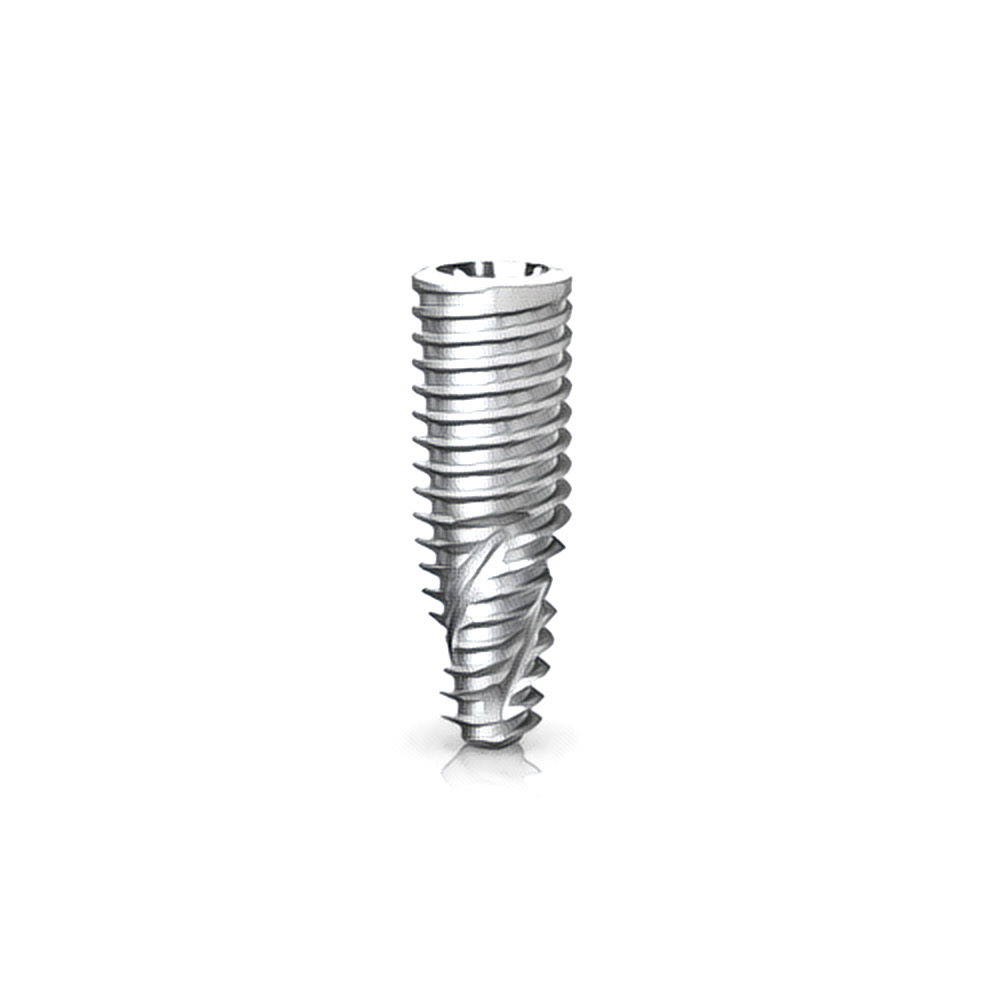
Cylindrical architecture with V-shape self-tapping threads. Purpose-built for dense cortical bone and grafted areas requiring predictable, uniform bone engagement without the risk of excess compression torque.

Cylindrical Design Grand Morse® 16° Self-Tapping V-Shape Threads Bone Types I–II Grafted Bone 60 N.cm
Pricing
From Contact Us
Per unit — Acqua or NeoPoros surface
Product

Full Product Specifications

Complete technical data for the Neodent Titamax GM cylindrical implant system. Current as of the latest Neodent product documentation.

ParameterSpecification
Implant TypeCylindrical — parallel walls, non-tapered body
Thread DesignV-shape profile · Self-tapping · Double threaded (dual lead)
Thread FunctionBone cutting — threads slice through cortical bone without lateral compression
Apex DesignSelf-tapping apex — no bone tap required for D2 bone; tap recommended for D1
Connection TypeGrand Morse® 16° internal cone (Morse taper)
Platform DesignPlatform switching — prosthetic platform narrower than implant platform
Surface TreatmentAcqua (hydrophilic, nitrogen-sealed) · NeoPoros (SLA equivalent)
Available Diameters3.75 mm · 4.3 mm · 5.0 mm
Available Lengths7 · 8 · 9 · 11 · 13 · 15 · 17 mm
Primary IndicationBone Types I and II (dense cortical) — mandible, anterior maxilla
Secondary IndicationMature block bone graft and GBR sites with dense newly formed bone
Maximum Insertion Torque60 N.cm rated — target 35–50 N.cm clinically
Bone Tap RequirementMandatory in D1 cortical bone · Recommended in D2 bone
MaterialGrade IV commercially pure titanium (cpTi) — TiO₂ surface oxide layer
CompatibilityAll Neodent Grand Morse prosthetic components — same as Drive GM and Helix GM
RegulatoryANVISA registered · CE marked · FDA 510(k) cleared

What is the Titamax GM?

The Neodent Titamax GM is the cylindrical member of the Grand Morse family — and its parallel-wall geometry makes it fundamentally different from the tapered Helix and Drive GM models. While tapered implants create a wedge effect by compressing bone as they advance (generating increasing lateral pressure against the osteotomy walls), the Titamax GM's parallel body distributes insertion forces evenly along the entire prepared osteotomy length. This makes the Titamax GM the preferred clinical choice for dense cortical bone — Bone Types I and II — where a tapered design would generate dangerously high insertion torques that risk microfracture of the cortical plate or ischemic necrosis from excessive bone compression.

The Titamax GM's V-shaped, self-tapping threads are engineered for cutting through dense cortical bone with controlled precision. Unlike the square threads of the Drive GM that work by compression, V-threads engage bone through a cutting mechanism — their angled faces slice into the cortical matrix as the implant rotates, creating clean thread paths without adding the lateral compression forces that a tapered body would amplify. This controlled cutting action makes insertion torque predictable and manageable even in the hardest cortical bone, which is why the Titamax GM is so frequently chosen for mandibular anterior sites and fully healed posterior ridges with dense quality established over years of loading.

Beyond dense bone scenarios, the Titamax GM has become a trusted choice for grafted sites. Block bone grafts and guided bone regeneration sites often produce dense, cortical-like new bone that is structurally different from native cancellous bone. This dense graft architecture responds better to the uniform force distribution of a cylindrical design than to the wedge compression of a tapered implant, which can fracture or displace the graft architecture before the implant is even fully seated. Surgeons placing implants into mature GBR sites consistently report more controlled and predictable insertion torques with the Titamax GM.

The Titamax GM shares the Grand Morse 16° connection with all other GM family implants, delivering the same cold-weld Morse taper interface and platform switching benefits across the entire system. This means when a dense-bone case is treatment-planned with Titamax GM, the clinician retains access to all MUA angles, Ti-Base options, and the complete Neodent GM prosthetic catalog — with full prosthetic interchangeability between Titamax GM, Drive GM, and Helix GM at the restoration level. One prosthetic inventory covers every implant in the family.
Titamax GM at a Glance
  • Parallel-wall cylinder distributes insertion forces evenly — prevents dangerous overtorque in dense D1 bone
  • V-shape self-tapping threads cut through cortical bone cleanly — no lateral compression generated
  • First choice for dense mandibular bone, anterior maxilla with thick cortex, and mature grafted sites
  • Grand Morse 16° connection: cold-weld Morse taper seal — same prosthetics as Drive GM and Helix GM
  • Platform switching preserves crestal bone biology across all dense-bone long-term cases
  • Full size matrix (3.75–5.0 mm diameter, 7–17 mm length) — same as Drive GM
  • Bone tap mandatory in true D1 cortical bone for controlled final torque
  • Acqua surface available for accelerated osseointegration in risk patients

Why Clinicians Choose the Titamax GM

Six features that make the Titamax GM the definitive choice for dense bone and grafted site implantology within the Neodent GM system.

🔵
Cylindrical Parallel-Wall Body
The non-tapered cylindrical design distributes stress uniformly along the full osteotomy length without creating lateral compression forces. This uniform load distribution prevents excessive torque buildup in dense cortical bone — the defining advantage over tapered implant designs when working in D1 and D2 bone quality.
✂️
V-Shape Self-Tapping Threads
The V-thread profile is designed for controlled bone cutting rather than compression. As the Titamax GM rotates, its angled thread faces slice cleanly into cortical bone, generating consistent and predictable resistance. The self-tapping apex eliminates the need for a bone tap in D2 bone, streamlining the surgical protocol significantly.
🏗️
Grafted Bone Performance
Block bone grafts and GBR sites produce dense, uniform cortical-like bone that responds ideally to cylindrical geometry. The predictable V-thread cutting action in dense graft material gives surgeons controlled, reproducible insertion torques — critical when visual assessment of graft density before placement is impossible.
🔒
Grand Morse® 16° Internal Cone
The deep Morse taper creates a metal-to-metal friction cold-weld between implant and abutment under loading. This self-locking connection eliminates the microgap and micromovement inherent to conventional hex designs, protecting crestal bone and the peri-implant soft tissue seal for the long term.
⚖️
Controlled Torque Profile
Unlike tapered designs that can exceed target torques unpredictably in dense bone, the Titamax GM produces a linear, gradual torque increase during insertion. Surgeons report a highly predictable feel — allowing precise control of final seating torque without the sudden torque spikes common with tapered implants in D1 bone.
🏛️
Platform Switching
The prosthetic platform diameter is narrower than the implant platform, shifting the microgap away from the bone crest. This consistently demonstrates superior crestal bone maintenance versus same-diameter platforms in long-term studies — particularly relevant in dense anterior cases where aesthetics and tissue architecture matter most.

Clinical Indications & Case Selection

The Titamax GM performs best in specific scenarios. Know when to choose it and when a tapered implant is the better option.

Indications Use Titamax GM
  • Dense cortical bone, Bone Types I and II — mandibular anterior and posterior, thick anterior maxilla
  • Mature block bone graft sites (autogenous, xenogenic) — typically 4+ months post-graft healing
  • Well-healed GBR sites with dense, mature regenerated bone — 6+ months post-regeneration
  • Long-term edentulous ridges with excellent bone quality and high HU values on CBCT
  • Cases requiring perfectly controlled, predictable insertion torque — critical aesthetic zones
  • Situations where tapered implants generate dangerous overtorque in dense cortical bone
  • Mandibular posterior sites with dense cortical bone and adequate vertical height
  • Full-arch cases where uniform force distribution across multiple implants is required
Contraindications Choose Alternative
  • Type III and IV soft bone — use Drive GM instead; Titamax GM cannot generate adequate primary stability in porous bone through cutting alone
  • Post-extraction immediate implant placement — tapered Drive GM or Helix GM preferred for socket engagement via compression
  • Immediate loading in soft bone — insufficient primary stability without compression advantage of a tapered design
  • Sites requiring extra length beyond 17 mm — GM Long is the appropriate choice
  • Active or recently resolved periodontal infection in the implant zone
  • Immature graft sites — <4 months for block grafts, <6 months for GBR sites
  • Very narrow ridges requiring maximum bone preservation — consider narrow diameter alternatives

Surgical Protocol Notes

Key technique considerations for Titamax GM placement in dense bone. Always consult the official Neodent surgical manual for complete protocol details.

1
Pre-Surgical Assessment — Bone Quality Confirmation
CBCT analysis with HU measurement to confirm bone density. Bone Type I: HU >1250 (very dense compact cortical — bone tap mandatory). Bone Type II: HU 850–1250 (dense with trabecular core — bone tap recommended). Verify ridge width precisely — the Titamax GM is cylindrical, so width planning must be exact: there is no taper to compensate for minor discrepancies unlike with tapered implants.
2
Full-Diameter Osteotomy Preparation
The Titamax GM requires full-diameter drill preparation to the planned implant diameter — unlike the Drive GM, which uses undersized drilling. In dense bone, do not undersize the osteotomy: the cylindrical body cannot compress bone laterally, and forcing it into an undersized preparation generates immediate overtorque. Speed: 600–800 RPM in dense D1–D2 bone with constant copious irrigation. Use only sharp, fresh drills — dull drills in hard bone generate heat that necroses the cortical bone quality you are relying on for stability.
3
Bone Tapping — Mandatory in D1 Bone
In true D1 cortical bone: bone tap IS required before Titamax GM insertion. Though V-threads are self-tapping, dense D1 bone generates insertion torques exceeding safe limits without tapping. Tap to the same diameter as the planned implant at 20–30 RPM with irrigation. In D2 bone: bone tap recommended but not always mandatory — assess based on clinical resistance during drilling. In D2–D3 transition zones, the self-tapping apex handles the apical cortex without tapping.
4
Implant Insertion
Insert at 15–20 RPM with a torque-limited handpiece set to maximum 50 N.cm. The cylindrical body should advance steadily with consistent, progressive resistance — this is the hallmark feel of the Titamax GM in properly prepared dense bone. If resistance is higher than expected early in insertion, stop and re-evaluate the osteotomy — do not force through unexpected early resistance as this risks cortical microfracture. Finish with a manual torque wrench for final seating.
5
Final Torque Assessment
Target insertion torque: 35–50 N.cm for standard conventional loading. Dense bone cases can achieve 45–55 N.cm comfortably with proper preparation. Avoid targeting maximum torque (60 N.cm) as a goal — in D1 bone this causes cortical microfractures that compromise early healing. For immediate loading consideration: use RFA (ISQ ≥65) as the primary indicator in dense bone. High insertion torque in cortical bone does not always correlate with interface quality the way it does in softer bone.
6
Healing Protocol Selection
Standard for Titamax GM: submerged conventional healing — 8–12 weeks for mandible, 12–16 weeks for maxilla. For grafted sites, follow the graft manufacturer's recommended loading timeline. Early loading (6–8 weeks) may be considered in Type I–II mandibular bone with ISQ ≥70. Immediate loading is possible in full-arch protocols with experienced clinicians — for single-unit immediate loading in dense anterior sites, strict occlusal management and provisional restoration design are essential for success.
Clinical Tip — When Dense Bone Surprises You

A common error is reaching for a tapered implant in every case regardless of bone density. In dense D1–D2 bone, tapered implants can lock up before reaching final seating position — the wedge effect in already-dense bone exceeds safe torque limits. If you have ever placed a tapered implant in dense mandibular bone and felt it "freeze" before final depth, you have experienced this. The Titamax GM eliminates this scenario by relying on controlled V-thread cutting rather than body compression — giving you predictable, safe seating in the hardest bone with final torque values you can trust for your loading protocol decision.

Available Sizes & Configurations

All available diameter × length combinations for the Neodent Titamax GM. Both Acqua and NeoPoros surface treatments available in all configurations.

Diameter ↓ / Length → 7 mm8 mm9 mm11 mm13 mm15 mm17 mm
3.75 mm
4.3 mm
5.0 mm

All configurations available in Acqua (hydrophilic) and NeoPoros (SLA) surface treatments. Contact us for pricing on specific configurations.

Titamax GM — Common Questions

Answers to the most common clinical questions about placing the Titamax GM in dense bone and grafted sites.

Ready to Order Titamax GM?

Contact us for current pricing, availability by configuration, and volume discounts. Responses within 2 business hours.

Request Titamax GM Quote on WhatsApp